
14 июля 2025
Бобровников В.О. выступил с докладом в Самарканде
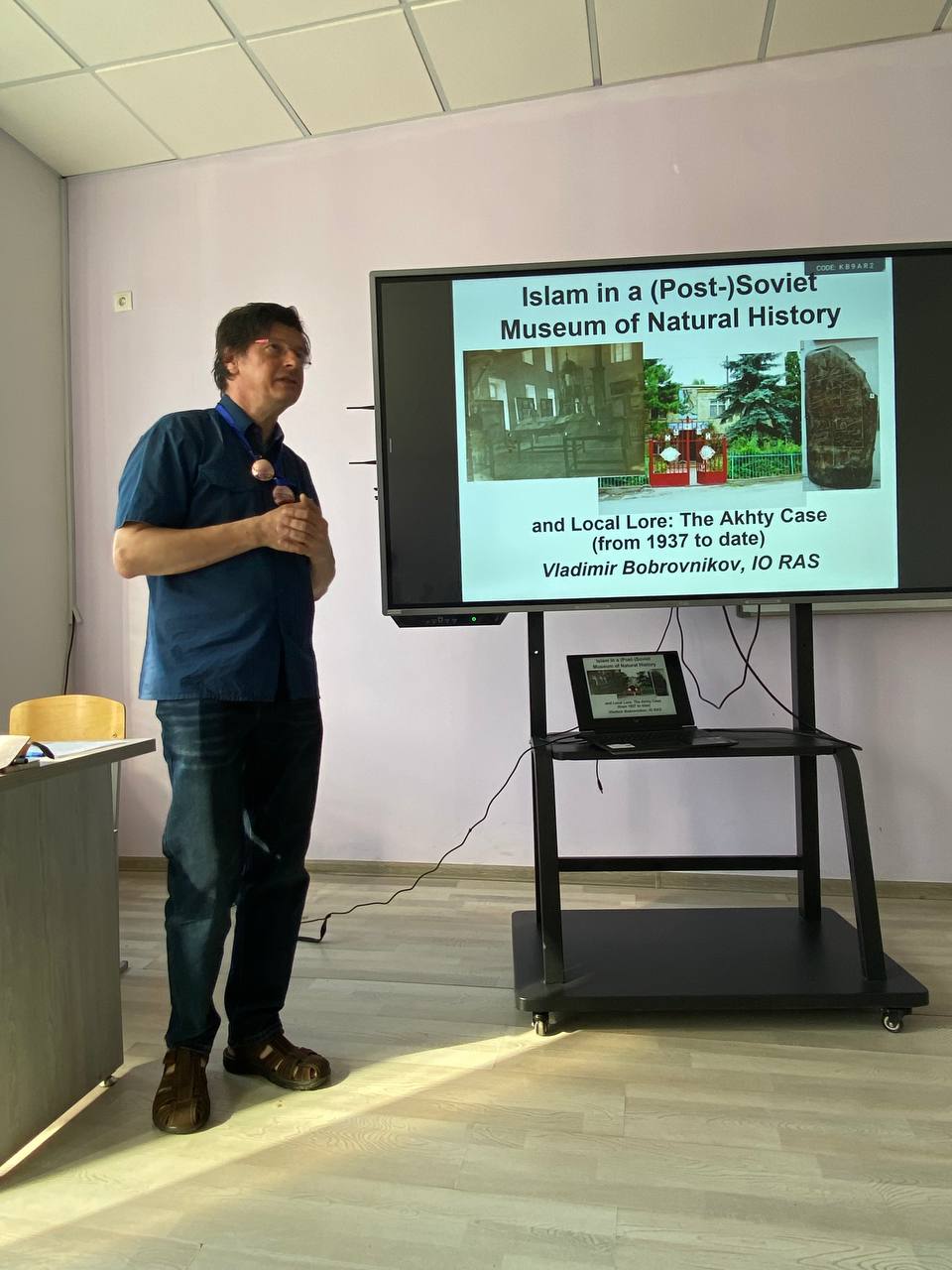
Islam in (Post-)Soviet Museum of Natural History and Local Lore: The Akhty Case in Southern Dagestan, 1937-2024
The object of study is the largest district branch of the Alibek Taho-Godi National Museum situated in the village of Akhty in Southern Dagestan. It was established on the basis of the school collection in 1937 and affiliated with the Local Lore Museum in Makhachkala in 1977. The museum collection includes more than 12000 items dating between the 14th and the 21st centuries: Islamic manuscripts and documents, mosque, madrasa and shrine utensils, prayer carpets, clothes, charms, rosaries, anti-Islamic layouts, painting, posters, and other material objects, only a part of which is exhibited. In 1937-1993 the museum was housed in Friday mosque. In 1996 it was reopened in the former building of the district committee of the Communist Party. It is noteworthy that the museum was created and is still managed by the three generations of Daglarov family of school teachers. From the 1990s it is involved in the district and republican Islamic infrastructure. To date this and other Dagestani museums were never examined as distinct social actors who took part in re-Islamization. The focus of my case study is on social infrastructure of this museum and its relationship with diverse religious and state actors at the district and republican levels in Southern Dagestan in the 1990s-2020-s. In it I examine connections of people, texts, and other exhibits of the museum, dynamics of images of Islam in its changing expositions, as well as competing projects of local history museum collectors. I rely on data of field work and participant observation carried out in the Akhty museum in the summer-autumn fall of 2024. I will also use results of two more seasons of archeographic work I conducted in the collection of the Akhty museum with Shamil Shikhaliev and Ilona Chmilevskaia in 2022-2023.
The present study resulted from the research project No. 24-18-00662 generously supported by the Russian Scientific Foundation in 2024.
 Программа